
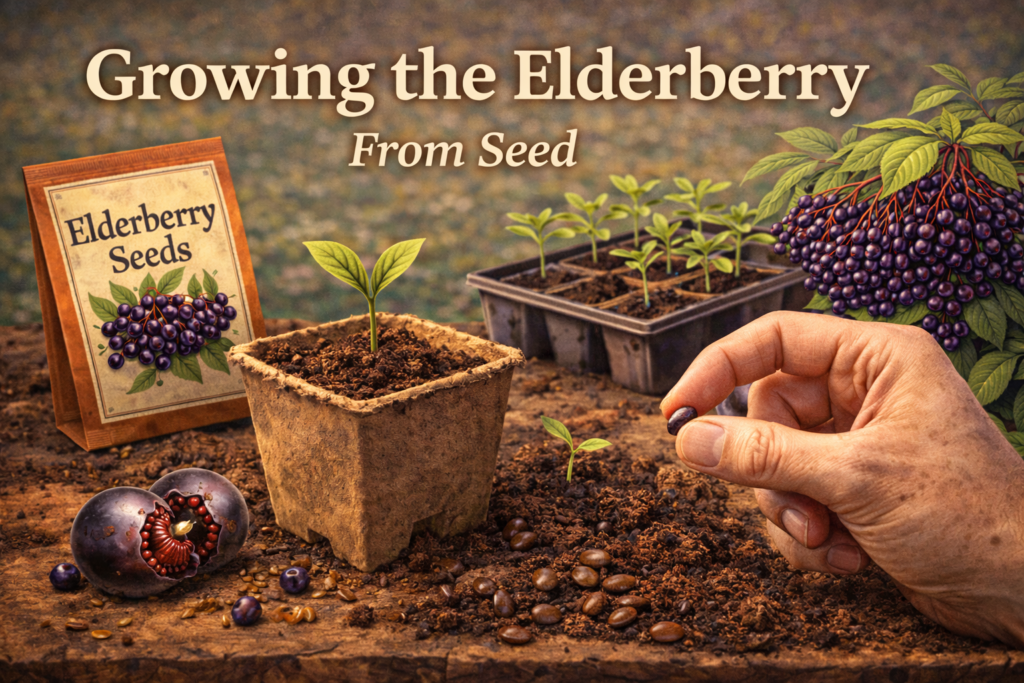
Growing elderberry from seed is a slower path than buying established plants or cuttings, but it can be a rewarding one. If you enjoy the process of starting plants from scratch, elderberry seeds offer a hands-on way to learn the crop from the very beginning.
The most important thing to know is that elderberry seeds usually need patience. They often require a period of cold stratification (a cold, moist rest period) before they germinate well. In other words, elderberry is not usually a “plant today, sprout next week” kind of seed.
Is it better to grow elderberry from seed or cuttings?
For many growers, cuttings are the faster and more predictable option because they produce plants that are genetically similar to the parent plant. Seeds can vary more in growth habit, berry size, and productivity.
That said, growing elderberry from seed can still be a great choice if you:
- enjoy propagation and experimentation,
- want to grow many plants at low cost,
- or simply want to learn the plant’s full life cycle.
Step 1: Collect ripe elderberries
If you are collecting your own seed, start with fully ripe elderberries. The berries should be dark and mature. Remove the seeds from the fruit by gently crushing the berries and rinsing away the pulp.
Clean seeds are easier to handle and less likely to mold during storage or stratification.
Step 2: Prepare the seeds for stratification
Elderberry seeds typically germinate better after a cold period. This mimics what happens naturally outdoors over winter.
A common approach is to place the seeds in a moist medium (such as damp sand, peat-free seed mix, or a paper towel) inside a sealed container or bag, then refrigerate them. The medium should be moist, not soaking wet.
This cold treatment is often called cold stratification.
Step 3: Be patient with germination timing
Elderberry seeds can germinate unevenly, and some may take longer than others. Even with good preparation, germination may not happen all at once.
This is normal. When growing elderberry from seed, patience is part of the process. Keep the growing medium lightly moist and avoid overwatering while you wait.
Step 4: Sow in trays or small pots
Once stratified, sow the seeds in seed trays or small pots filled with a light, well-draining seed-starting mix. Cover them lightly—just enough to keep them in contact with the soil.
Place the pots in a bright area with stable warmth (but not excessive heat). Gentle light and consistent moisture help support early growth.
Step 5: Care for young seedlings
When seedlings appear, give them:
- good light,
- steady moisture,
- airflow,
- and room to grow.
Young elderberry seedlings are still delicate, so avoid harsh sun exposure too early if they were started indoors. Once they are stronger, begin gradually acclimating them to outdoor conditions before transplanting.
What to expect in the first year
Seed-grown elderberries may grow slowly at first while they establish roots. The first season is usually about plant development, not heavy production.
The long-term benefit is that you are building plants from the ground up. If you plan to grow elderberries as part of a farm, garden row, or homestead planting, starting from seed can be a useful learning experience—even if you later decide to use cuttings for larger-scale planting.
Common mistakes when growing elderberry from seed
One common mistake is skipping stratification and expecting quick germination. Another is keeping seeds too wet, which can lead to rot or mold.
It’s also easy to give up too soon. Elderberry seeds can be slower and less uniform than many vegetable seeds, so uneven results do not always mean failure.
Final thoughts
Growing the elderberry from seed takes more time than starting from cuttings, but it teaches you a lot about the plant and can be a satisfying way to begin. The keys are simple: use ripe seed, prepare it properly, allow for cold stratification, and stay patient during germination.
If you enjoy the process of growing—not just the harvest—seed propagation is a meaningful way to start your elderberry journey.