
Elderberries are one of those ingredients that feel both traditional and surprisingly versatile. Their flavor is deep, tart, and rich—somewhere between blackberry, blackcurrant, and a lightly earthy wild berry. That makes them perfect for more than just one use. With the right preparation, elderberries can become syrups, jams, warm drinks, sauces, and dessert fillings that add real character to your kitchen.
If you’re searching for elderberry recipes, the best place to begin is with a simple truth: elderberry usually works best when cooked and balanced with sweetness, citrus, or spice. Once you understand that, you can use it in a wide range of recipes without overcomplicating anything.
A quick note before cooking with elderberries
Elderberries are most commonly used cooked rather than raw. In home cooking, they are typically simmered into syrups, jams, compotes, and sauces. Cooking also helps soften their tartness and brings out their best flavor.
The easiest way to start is with recipes that use elderberries in a liquid or cooked fruit base, because you can taste and adjust sweetness, spice, and acidity as you go.
Why elderberries work so well in recipes
Elderberries have a bold flavor, which is exactly why they’re useful. In small amounts, they add color and depth. In larger amounts, they become the main note in a recipe and create a more complex berry taste than many common fruits.
They pair especially well with:
- lemon and orange
- honey and sugar
- cinnamon and ginger
- apples, pears, and plums
- vanilla
- blackberries and raspberries
These combinations make elderberry easier to work with and help you build recipes that taste balanced rather than too tart or heavy.
Elderberry syrup recipe idea
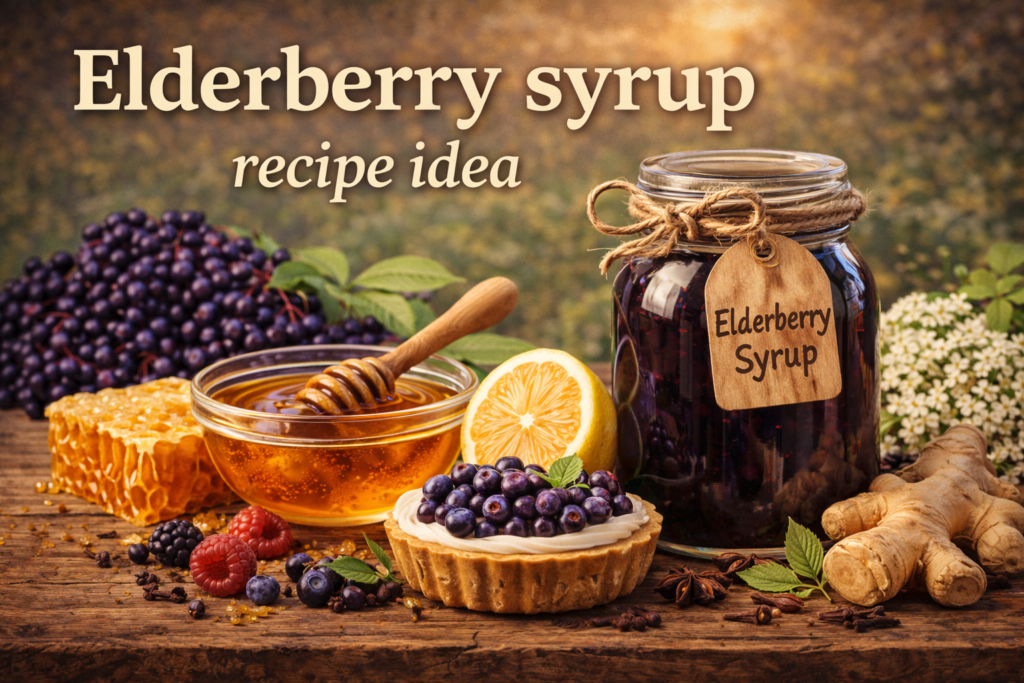
Elderberry syrup is one of the most popular and practical elderberry recipes because it can be used in many ways: stirred into warm water, added to tea, drizzled over pancakes, mixed into sparkling drinks, or used as a dessert sauce base.
A simple homemade version is made by simmering elderberries with water, then straining and adding a sweetener such as honey or sugar. Many people also add cinnamon, ginger, or citrus for extra flavor.
The reason this recipe is so useful is that it becomes a “starter ingredient” for other recipes. Once you have syrup, you can use it in drinks, glazes, or desserts without starting from scratch each time.
Elderberry tea and warm drink ideas
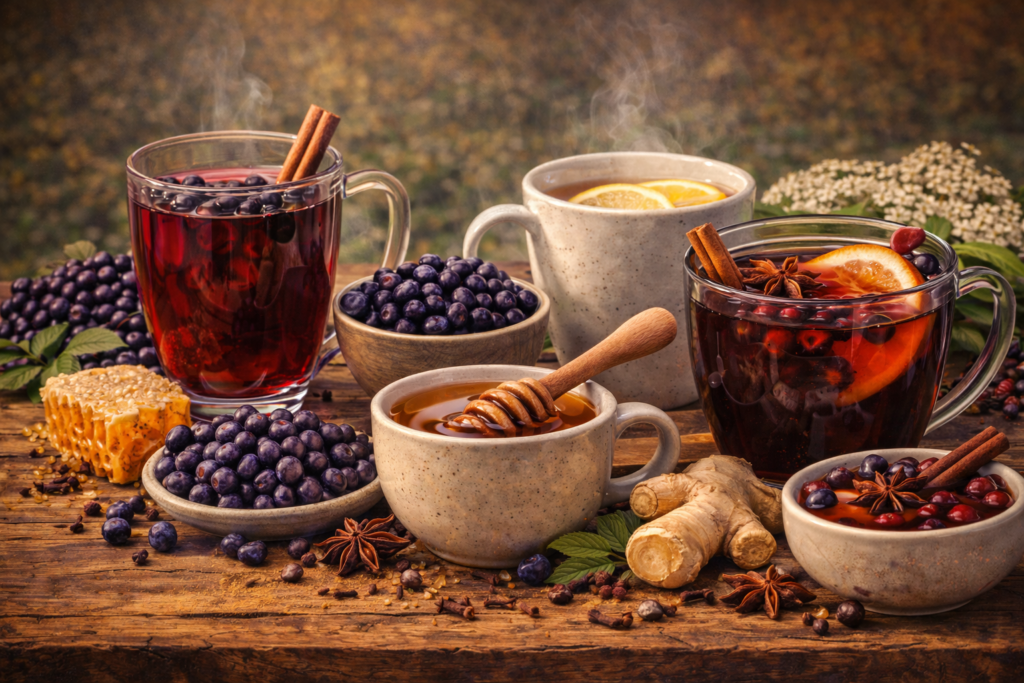
Elderberry works beautifully in warm drinks because its tartness softens when combined with honey and spice. One of the easiest elderberry recipes is a tea-style infusion or concentrate made with cooked elderberries, ginger, and cinnamon, finished with lemon or orange.
For a cozy drink, elderberry pairs well with:
- lemon juice for brightness
- honey for roundness
- ginger for warmth
- cinnamon for depth
- orange zest for a softer citrus note
This kind of recipe is ideal if you want something simple and flexible. You can make it stronger like a concentrate or lighter like a fruit tea.
Elderberry jam and preserves
Elderberry jam is a classic use, but elderberries are often even better when combined with another fruit. Because elderberry has a strong flavor, pairing it with apple, blackberry, raspberry, or plum can create a more rounded preserve with better texture and a familiar fruit profile.
A good elderberry jam recipe usually includes:
- elderberries as the main flavor
- sugar for sweetness and preservation
- lemon juice for acidity and balance
- sometimes another fruit for body and texture
If you prefer a less intense flavor, mixed-berry preserves are a great place to start. Elderberry still adds richness and color, but the final result feels more approachable.
Elderberry compote for breakfast and desserts
Compote is one of the easiest elderberry recipes for beginners because it does not require special equipment or exact jam-setting technique. You simply cook elderberries with sweetener and a little liquid until the fruit breaks down and thickens slightly.
You can use elderberry compote on:
- yogurt
- oatmeal
- toast
- pancakes
- waffles
- vanilla ice cream
- cheesecake
Adding apple or pear to the compote is especially helpful if you want a softer, sweeter result. A little cinnamon or vanilla also works well here.
Elderberry dessert sauce ideas
Elderberry makes an excellent dessert sauce because of its dark color and concentrated flavor. When reduced with sugar and a bit of citrus, it becomes a rich topping for creamy desserts.
Some easy ways to use elderberry dessert sauce:
- over vanilla ice cream
- over cheesecake
- in layered parfaits
- drizzled over pound cake
- swirled into yogurt bowls
Vanilla is one of the best ingredients to pair with elderberry in dessert sauces because it smooths out the tartness and makes the berry flavor feel fuller and softer.
Elderberry recipes for baking
Elderberries can also be used in baking, especially when paired with fruit that adds natural sweetness and structure. Apple-elderberry pies, berry crumbles, and rustic galettes are all good options.
In baking, elderberry usually performs best when:
- combined with apple, pear, or plum
- balanced with sugar and citrus
- thickened properly so the filling is not too loose
This helps prevent the filling from becoming too sharp or watery. Even a small amount of elderberry can transform a standard fruit dessert into something more distinctive.
Savory elderberry recipe ideas
Although elderberries are mostly associated with sweet recipes, they can also be used in savory cooking. A reduced elderberry sauce can work well with roasted meats when balanced with herbs, onion, garlic, and acidity.
Elderberry can pair well in savory recipes with:
- thyme or rosemary
- black pepper
- onion and garlic
- vinegar or balsamic-style acidity
The key is to treat elderberry like a dark fruit component in a sauce, not like a dessert topping. Keep sweetness controlled and build structure with salt, acid, and herbs.
Easy elderberry recipe combinations to start with
If you want beginner-friendly elderberry recipes, start with combinations that are hard to get wrong. Elderberry with lemon and honey is a reliable base for syrup or warm drinks. Elderberry with apple and cinnamon is ideal for compote or pie filling. Elderberry with orange and vanilla works very well in dessert sauces and jams.
These combinations help you understand how elderberry behaves and make it easier to experiment later with your own recipes.
Common mistakes when cooking with elderberries
One common mistake is not balancing elderberry with enough acid or sweetness. Because the flavor is naturally bold and tart, a recipe can taste flat or overly sharp if it needs lemon, orange, honey, or sugar and doesn’t get it.
Another mistake is trying to make elderberry do everything by itself in a recipe where texture matters. In jams, pies, and compotes, combining elderberry with apple, pear, or another berry often gives a better final result.
And finally, many people over-spice elderberry. Cinnamon, clove, ginger, and star anise can all work—but elderberry has a strong personality already, so it’s usually better to season lightly and adjust slowly.
Final thoughts
The best elderberry recipes are the ones that respect what elderberry already is: a bold, tart, dark berry with natural depth. It shines when paired with balancing ingredients like citrus, honey, apples, vanilla, and warm spices, and it can be used in everything from syrups and teas to jams, dessert sauces, and savory reductions.
If you’re new to elderberry cooking, start simple with a syrup or compote. Once you get a feel for the flavor, you’ll find that elderberry is not a difficult ingredient at all—it just rewards thoughtful pairing and a little patience.